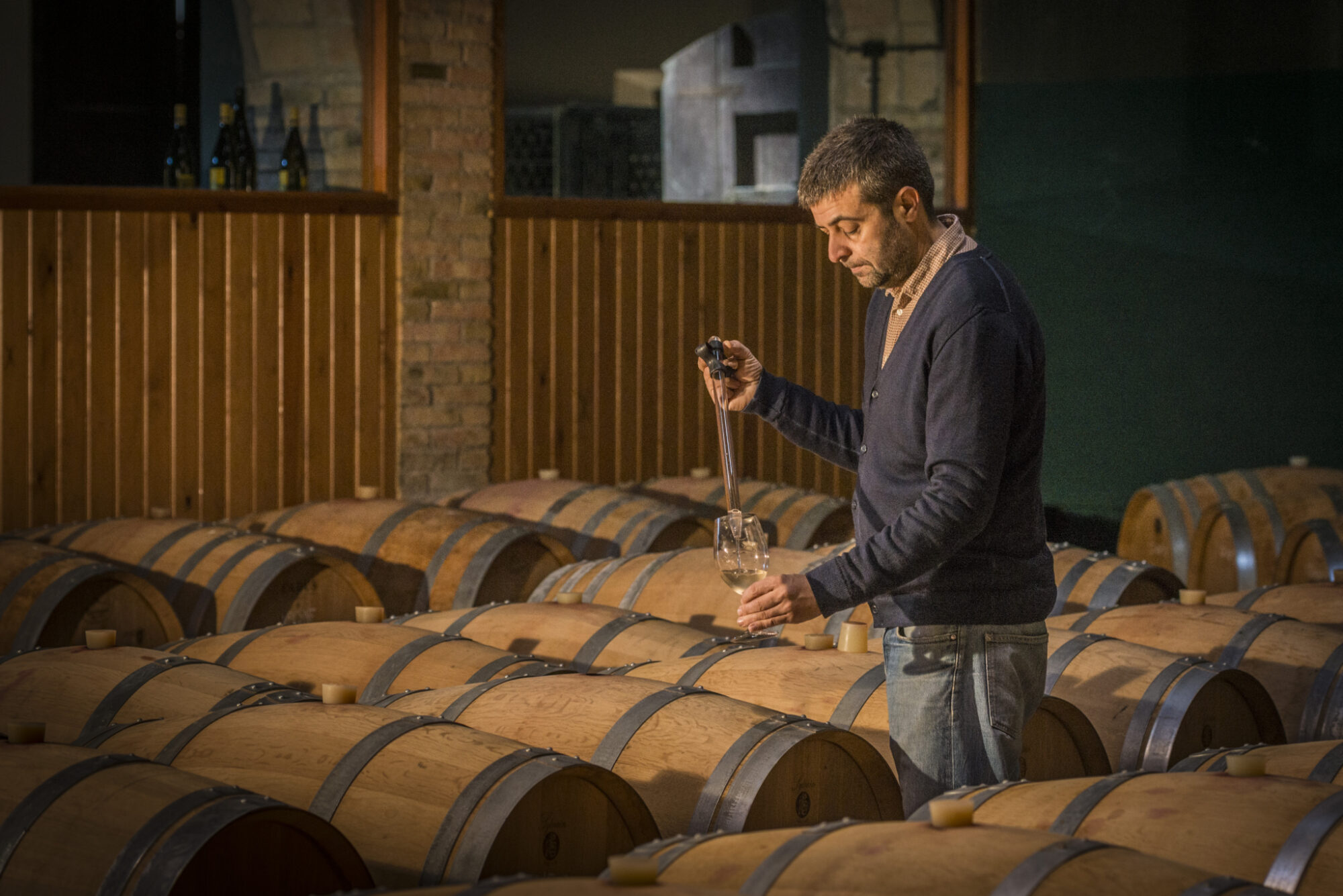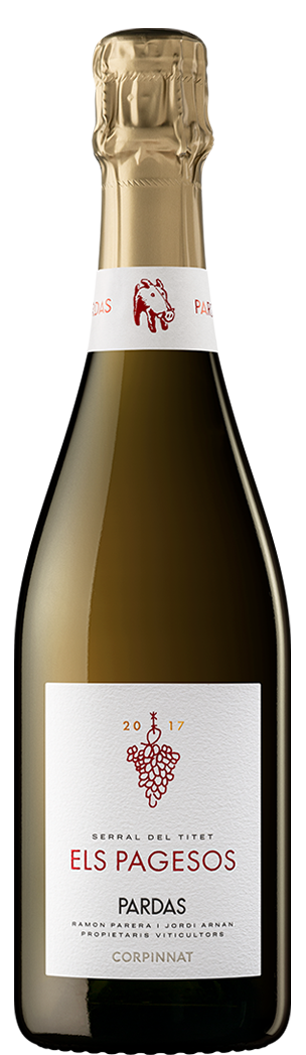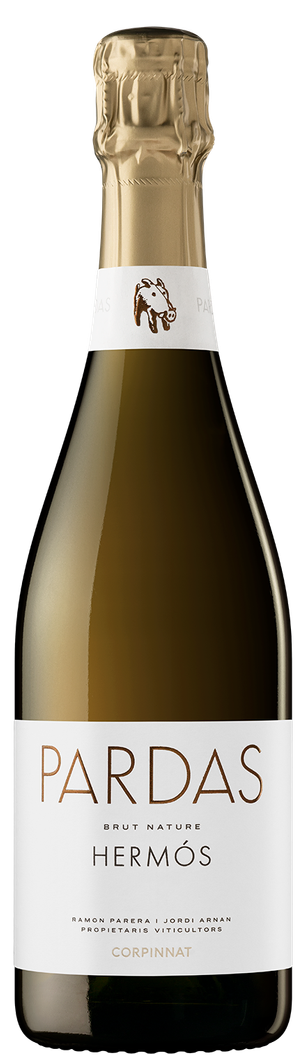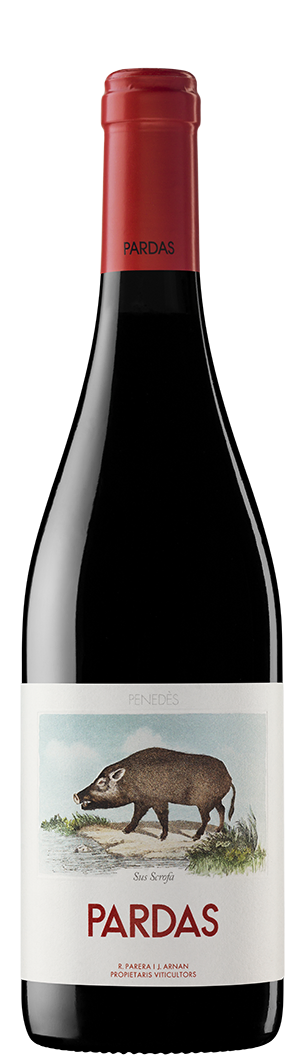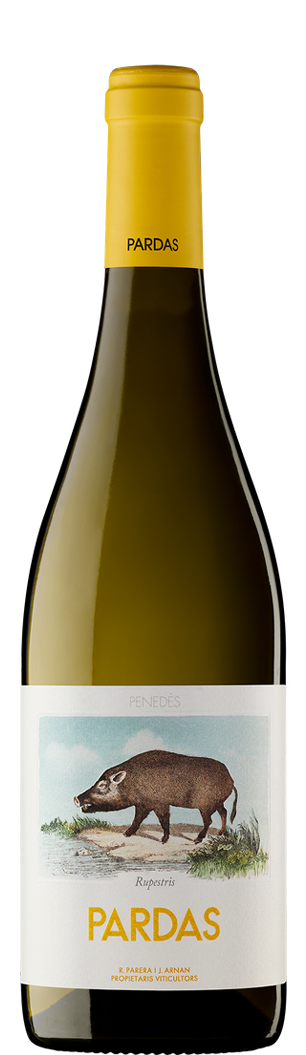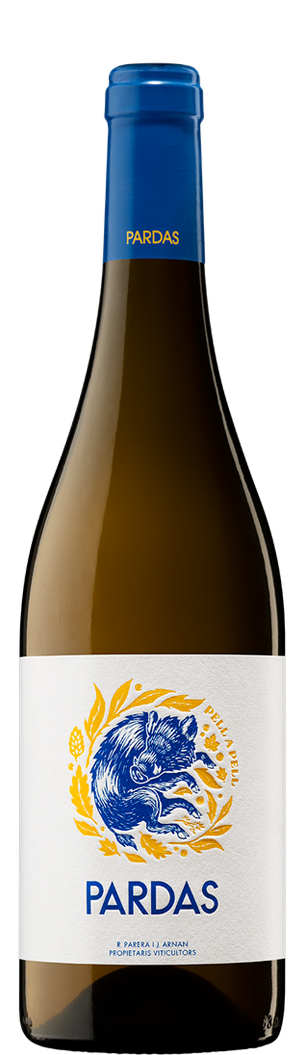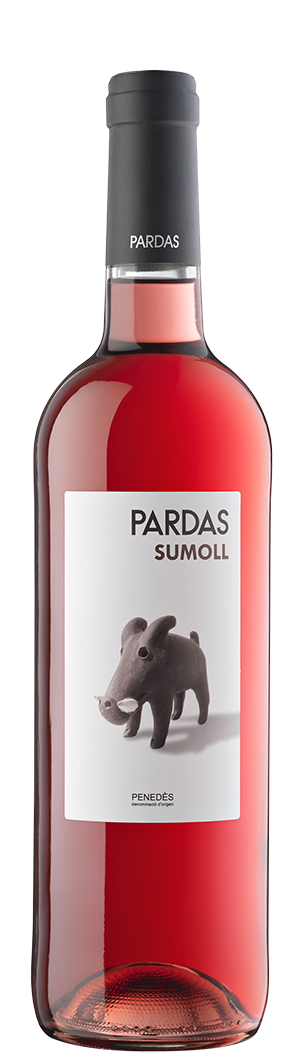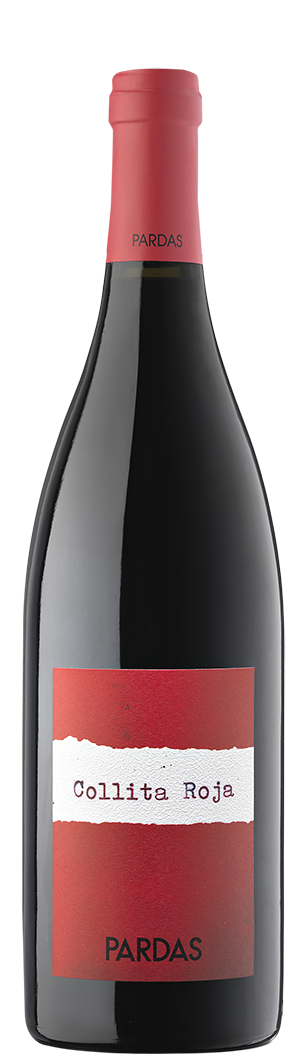
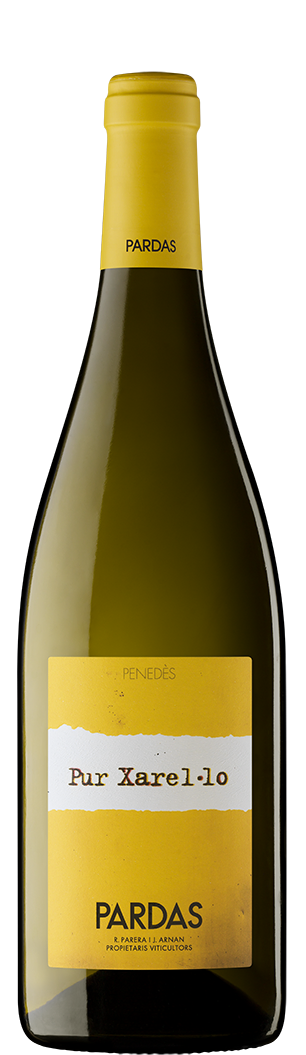

Why this Xarel·lo and no other wine? Because we believe it is our most noble variety; no other grape allows us to express our terroir like Xarel·lo. Furthermore, we think it is the native white variety with the greatest aging potential: high alcohol content, good acidity, complete climate adaptation... But we also defend Xarel·lo out of tradition. With PARDAS Pur Xarel·lo, we wanted to reflect our personal vision, from a contemporary perspective, of the wine that almost all winegrowers humbly crafted in their country houses (masies) in the past within our territory. Born from the conviction that the Xarel·lo variety has all the attributes and potential to become a great aged wine, and that the future lies in valuing indigenous varieties, our Pardas Xarel·lo 2021 is born. A distinct and authentic wine, a reflection of our soils and a fair viticulture. The result is a fine and complex wine with aging potential.
6520 bottles
Muç, Lola, Patricio, and Torner Vineyards
Calcareous soils poor in organic matter content. Shallow with a superficial petro-calcic horizon.
100% Xarel·lo
In all the vineyards cultivated to produce Xarel·lo, no herbicides, insecticides, or synthetic products are used. We practice no-till farming: we do not plow the soil and work with spontaneous cover crops to protect it.
Harvested on September 8, 2021.
Destemmed and crushed grapes, and gravity-fed press loading. 55% free-run juice. Part of the wine ferments in new and second-use 500-liter French oak barrels, and another part ferments in a 1600-liter concrete egg. All at a temperature between 18 and 21ºC.
Part in a 1600-liter concrete egg and part in a 500-liter barrel.
June 10, 2022
Alcohol content: 12.50% vol.
Total acidity: 4.2 g/l
pH: 3.13
Volatile acidity: 0.37 g/l
SO2 F/T: 18/41
3996 bottles
Canyes, Rebato, Lola, Patricio, and Torner Vineyards
Calcareous soils poor in organic matter content. Shallow with a superficial petro-calcic horizon.
100% Xarel·lo
In all the vineyards cultivated to produce Xarel·lo, no herbicides, insecticides, or synthetic products are used. We practice no-till farming: we do not plow the soil and work with spontaneous cover crops to protect it.
Harvested on August 28, 2020.
Destemmed and crushed grapes, and gravity-fed press loading. 55% free-run juice. Part of the wine ferments in new and second-use 500-liter French oak barrels, and another part ferments in a 1600-liter concrete egg. All at a temperature between 18 and 21ºC.
Part in a 1600-liter concrete egg and part in a 500-liter barrel.
June 4, 2021
Alcohol content: 12.50% vol. Total acidity: 4.2 g/l pH: 3.13 Volatile acidity: 0.23 g/l SO2 F/T: 22/52
5933 bottles and 125 Magnums
Canyes Vineyard
Calcareous soils poor in organic matter content. Shallow with a superficial petro-calcic horizon.
100% Xarel·lo
In all the vineyards cultivated to produce Xarel·lo, no herbicides, insecticides, or synthetic products are used. We practice no-till farming: we do not plow the soil and work with spontaneous cover crops to protect it.
Harvested on September 10, 2019.
Destemmed and crushed grapes, and gravity-fed press loading. 55% free-run juice. Part of the wine ferments in new and second-use 500-liter French oak barrels, and another part ferments in a 1600-liter concrete egg. All at a temperature between 18 and 21ºC.
Part in a 1600-liter concrete egg and part in a 500-liter barrel.
August 1, 2020
Alcohol content: 12.2% vol. Total acidity: 3.8 g/l pH: 3.15 Volatile acidity: 0.30 g/l SO2 F/T: 22/49
6839 bottles and 70 Magnums
Canyes and El Portell Vineyards
Calcareous soils poor in organic matter content. Shallow with a superficial petro-calcic horizon.
100% Xarel·lo
In all the vineyards cultivated to produce Xarel·lo, no herbicides, insecticides, or synthetic products are used. We practice no-till farming: we do not plow the soil and work with spontaneous cover crops to protect it.
Harvested on September 13 and 17, 2018
Destemmed and crushed grapes, and gravity-fed press loading. 55% free-run juice. Part of the wine ferments in new and second-use 500-liter French oak barrels, and another part ferments in a 1600-liter concrete egg. All at a temperature between 18 and 21ºC.
Part in a 1600-liter concrete egg and part in a 500-liter barrel.
June 12, 2019
Alcohol content: 11.5% vol.
Total acidity: 4.38 g/l
pH: 3.10
Volatile acidity: 0.20 g/l
SO2 F/T: 20/46
4859 bottles and 112 Magnums
La Vella Vineyard (1979)
Calcareous soils poor in organic matter content. Shallow with a superficial petro-calcic horizon.
100% Xarel·lo
In all the vineyards cultivated to produce Xarel·lo, no herbicides, insecticides, or synthetic products are used. We practice no-till farming: we do not plow the soil and work with spontaneous cover crops to protect it.
Harvested on August 26, 2017
Destemmed and crushed grapes, and gravity-fed press loading. 55% free-run juice. Part of the wine ferments in new and second-use 500-liter French oak barrels, and another part ferments in a 1600-liter concrete egg. All at a temperature between 18 and 21ºC.
Part in a 1600-liter concrete egg and part in a 500-liter barrel.
June 8, 2018
Alcohol content: 12.5% vol. Total acidity: 4.30 g/l pH: 3.13 Volatile acidity: 0.45 g/l SO2 F/T: 20/57
3178 bottles and 103 Magnums
La Vella Vineyard (1979)
Calcareous soils poor in organic matter content. Shallow with a superficial petro-calcic horizon.
100% Xarel·lo
In all the vineyards cultivated to produce Xarel·lo, no herbicides, insecticides, or synthetic products are used. We practice no-till farming: we do not plow the soil and work with spontaneous cover crops to protect it.
Harvested on September 6, 2016
Destemmed and crushed grapes, and gravity-fed press loading. 55% free-run juice. Part of the wine ferments in new and second-use 500-liter French oak barrels, and another part ferments in a 1600-liter concrete egg. All at a temperature between 18 and 21ºC.
Part in a 1600-liter concrete egg and part in a second-use 500-liter French oak barrel.
Alcohol content: 13% vol. Total acidity: 4.44 g/l pH: 3.12 Volatile acidity: 0.57 g/l SO2 F/T: 22/72
4563 bottles and 162 Magnums
La Vella (1979) and L'Emblanquinador (1965) Vineyards
Calcareous soils poor in organic matter content. Shallow with a superficial petro-calcic horizon.
100% Xarel·lo
In all the vineyards cultivated to produce Xarel·lo, no herbicides, insecticides, or synthetic products are used. We practice no-till farming: we do not plow the soil and work with spontaneous cover crops to protect it.
Harvested on August 31, 2015
Destemmed and crushed grapes, and gravity-fed press loading. 55% free-run juice. Part of the wine ferments in new and second-use 500-liter French oak barrels, and another part ferments in a 1600-liter concrete egg. All at a temperature between 18 and 21ºC.
Part in a 1600-liter concrete egg (52%), part in a new French oak 500-liter barrel (48%) and a second-use French oak barrel.
Alcohol content: 12.64% vol. Total acidity: 4.15 g/l pH: 3.18 Volatile acidity: 0.49 g/l
SO2 F/T: 23/82
4321 bottles and 172 magnums
La Vella (1979) and L'Emblanquinador (1965) Vineyards
Calcareous soils poor in organic matter content. Shallow with a superficial petro-calcic horizon.
100% Xarel·lo
In all the vineyards cultivated to produce Xarel·lo, no herbicides, insecticides, or synthetic products are used. We practice no-till farming: we do not plow the soil and work with spontaneous cover crops to protect it.
Harvested on September 13, 2014
Destemmed and crushed grapes, and gravity-fed press loading. 55% free-run juice. Part of the wine ferments in new 500-liter French oak barrels (48%), and another part ferments in a 1600-liter concrete egg (52%). All at a temperature between 18 and 21ºC.
Part in a 1600-liter concrete egg (52%), part in a new French oak 500-liter barrel (48%).
Alcohol content: 13.02% vol. Total acidity: 4.20 g/l pH: 3.15 Volatile acidity: 0.48 g/l
SO2 F/T: 23/77
3744 bottles and 103 magnums
La Vella (1979) and L'Emblanquinador (1965) Vineyards
Calcareous soils poor in organic matter content. Shallow with a superficial petro-calcic horizon.
100% Xarel·lo
In all the vineyards cultivated to produce Xarel·lo, no herbicides, insecticides, or synthetic products are used. We practice no-till farming: we do not plow the soil and work with spontaneous cover crops to protect it.
Destemmed and crushed grapes, and gravity-fed press loading. 55% free-run juice. Part of the wine ferments in new 500-liter French oak barrels (48%), and another part ferments in a 1600-liter concrete egg (52%). All at a temperature between 18 and 21ºC.
Part in a 1600-liter concrete egg (52%), part in a new French oak 500-liter barrel (48%).
Alcohol content: 12.80% vol. Total acidity: 4.7 g/l pH: 3.09 Volatile acidity: 0.47 g/l SO2 F/T: 23/80
3943 bottles and 55 magnums
La Vella (1979) and Patricio (1951) Vineyards
Calcareous soils poor in organic matter content. Shallow with a superficial petro-calcic horizon.
100% Xarel·lo
In all the vineyards cultivated to produce Xarel·lo, no herbicides, insecticides, or synthetic products are used. We practice no-till farming: we do not plow the soil and work with spontaneous cover crops to protect it.
Harvested on
Destemmed and crushed grapes, and gravity-fed press loading. 55% free-run juice. Fermentation takes place in new and second-use oak barrels and in a concrete egg.
8 months in barrels and concrete egg.
Alcohol content: 13.22% vol. Total acidity: 4.15 g/l pH: 3.11 Volatile acidity: 0.45 g/l
SO2 F/T: 23/96
6200 bottles
100% Xarel·lo
La Vella Vineyard: 3 Ha Xarel·lo vineyard planted in 1979 with a north-west orientation. Poor soil with very shallow petro-calcic horizon. Perfect adaptation of the variety to the land, ensuring it always ripens well. A classic vineyard for Pardas Xarel·lo. Yield: 2500 Kg/Ha.
El Muç Vineyard: 0.58 Ha Xarel·lo vineyard planted in 1971. Shallow clay-limestone soil with "cervell de gat" (calcareous nodules). Good ripening. Yield: 2800 Kg/Ha.
La Lola Vineyard: 1.2 Ha Xarel·lo vineyard, south-facing. Shallow clay-limestone soil. Yield: 4500 Kg/Ha. In all the vineyards cultivated to produce Xarel·lo, no herbicides, insecticides, or synthetic products are used. We practice no-till farming: we do not plow the soil and work with spontaneous cover crops to protect it.
on September 6 and 8, 2011.
Harvesting and manual grape selection in the vineyard. Cold grape reception. Free-run settling and subsequent pressing with a 50% yield. Static racking, prior to fermentation, after 24 hours and adjustment of turbidity with the fine lees. Fermentation in barrels at a controlled temperature of 16-17ºC. Bâtonnage of the lees during aging every 10 days. Vintage stabilized and clarified naturally. Aging for 8 months: 32% in a 1600-liter concrete egg capacity; 33% in 300-liter French oak barrels; 3% in new 300-liter Hungarian oak barrels; 32% in second-year 300-liter French oak barrels.
July 4, 2012
Alcohol content: 13.22% vol. Total acidity: 4.15 g/l pH: 3.11 Volatile acidity: 0.45 g/l SO2 F/T: 23/96
7770 bottles
100% Xarel·lo
La Vella Vineyard: 3 Ha Xarel·lo vineyard planted in 1979 with a north-west orientation. Poor soil with very shallow petro-calcic horizon. Perfect adaptation of the variety to the land, ensuring it always ripens well. A classic vineyard for Pardas Xarel·lo. Yield: 2500 Kg/Ha.
El Muç Vineyard: 0.58 Ha Xarel·lo vineyard planted in 1971. Shallow clay-limestone soil with "cervell de gat" (calcareous nodules). Good ripening. Yield: 2800 Kg/Ha. In all the vineyards cultivated to produce Xarel·lo, no herbicides, insecticides, or synthetic products are used. We practice no-till farming: we do not plow the soil and work with spontaneous cover crops to protect it.
on September 13 and 15, 2010.
Harvesting and manual grape selection in the vineyard. Cold grape reception. 12-hour pre-fermentation skin contact maceration. Free-run settling and subsequent pressing with a 60% yield. Static racking, prior to fermentation, after 24 hours and adjustment of turbidity with the fine lees. Fermentation in barrels at a controlled temperature of 16-17ºC. Bâtonnage of the lees during aging every 10 days. Vintage stabilized and clarified naturally.
for 6 months: 75% in 300-liter French oak barrels (50% new and 50% second-use); 7% in new 425-liter chestnut barrels; 18% in stainless steel vats.
July 19, 2011
Alcohol content: 13.25% vol. Total acidity: 4.45 g/l Volatile acidity: 0.40 g/l SO2 F/T: 25/104
pH: 2.88
8845 bottles
100% Xarel·lo
La Vella Vineyard: 3 Ha Xarel·lo vineyard planted in 1979 with a north-west orientation. Poor soil with very shallow petro-calcic horizon. Perfect adaptation of the variety to the land, ensuring it always ripens well. A classic vineyard for Pardas Xarel·lo. Yield: 2500 Kg/Ha.
El Muç Vineyard: 0.58 Ha Xarel·lo vineyard planted in 1971. Shallow clay-limestone soil with "cervell de gat" (calcareous nodules). Good ripening. Yield: 2800 Kg/Ha. In all the vineyards cultivated to produce Xarel·lo, no herbicides, insecticides, or synthetic products are used. We practice no-till farming: we do not plow the soil and work with spontaneous cover crops to protect it.
on September 4 and 5, 2009
Harvesting and manual grape selection in the vineyard. Cold grape reception. 12-hour pre-fermentation skin contact maceration. Free-run settling and subsequent pressing with a 60% yield. Static racking, prior to fermentation, after 24 hours and adjustment of turbidity with the fine lees. Fermentation in barrels at a controlled temperature of 16-17ºC. Bâtonnage of the lees during aging every 10 days. Vintage stabilized and clarified naturally.
for 8 months: 36% in new French oak barrels; 35% in used French oak barrels; 19% in chestnut barrels; 10% in stainless steel vats.
July 2, 2010
Alcohol content: 13.35% vol. Total acidity: 4.5 g/l Volatile acidity: 0.50 g/l SO2 F/T: 24/113 pH: 3.12
11150 bottles
100% Xarel·lo
Vineyards: L'Emblanquinador, El Penjat, La Vella. These are three nearby plots, planted about fifty years ago, across a total area of 4.5 Ha. They are rooted in shallow soil with a South-West orientation. Average yield: 2500 Kg/Ha. Harvested on 5/9/2008.
Vineyards: Torner, El Cementiri, Patricio. Small vineyards on the Can Comas estate, up to 80 years old, grafted onto Rupestris de Lot and 161-49. They survive in poor, calcareous soils with a South orientation. Average yield: 2000 Kg/Ha.
Harvesting and manual grape selection in the vineyard. Cold grape reception. 12-hour pre-fermentation skin contact maceration. Free-run settling and subsequent pressing with a 60% yield. Static racking, prior to fermentation, after 24 hours and adjustment of turbidity with the fine lees. Fermentation in barrels at a controlled temperature of 16-17ºC. Bâtonnage of the lees during aging every 10 days.
Clarification with bentonite. Crystal seeding and tartaric precipitation by applying low temperatures.
until May 2009: 66% in French oak barrels (50% new, 50% used); 23.5% in chestnut barrels; 10.5% in vats.
July 2009
Alcohol content: 13.25
Total acidity: 4.4 g/l sulfuric
pH: 3.10
Volatile acidity: 0.45 g/l acetic.